Uber Accident Lawyer in Denver, CO
Injured in a rideshare crash in Denver? Lionheart Injury Law specializes in holding Uber accountable and winning what your case is actually worth.
Start Your Free Case ReviewRecent Results

What Is My Denver Uber Accident Case Worth?
Uber accidents at our firm typically settle for $200,000 to $3 million, and Uber's $200,000 UM/UIM insurance policy is only the starting point. We also go after Uber directly when the Uber driver is at fault, in which case the amount that we can win on your case is based on what a jury awards, and can be tens of millions of dollars.
We build every case for trial from day one, which leads insurance companies to pay bigger and faster settlements. Uber's lawyers know our law firm and already offer us better settlements than other firms, because Uber knows we will take them all the way to trial.
At Lionheart Injury Law, you speak directly with your attorney, we help you get immediate medical care, regardless whether you have insurance, and there's no fee unless we win. Contact us now for a free consultation.
Why Hire Lionheart Injury Law for Your Denver Uber Accident
Uber, Lyft, and their carriers do not pay fair value to unrepresented victims. We have the internal Uber corporate documents that prove they make all their safety decisions based on how much they pay in insurance costs, and Uber puts enormous pressure on its insurance companies to pay out as little possible on all claims. Progressive (Uber's main carrier) and Mobilitas (Lyft's main carrier) operate with full-time defense playbooks built around rideshare-specific defenses: denying the app was active, pushing passengers toward arbitration, finger-pointing between the rideshare carrier and the driver's personal policy, and exploiting Colorado's 50% comparative-fault bar to argue you caused your own injury.
We have litigated against that playbook in Denver County and throughout Colorado, and we have consistently won against Uber where other law firms have accepted Uber's lowball settlements. We are not like the out-of-state firm running ads on late-night TV that has never tried a case in front of a Colorado jury.
What You Get When You Hire Us:
- Trial-ready preparation. Every case is built for a Denver County jury, even the ones that settle at mediation.
- Direct attorney access. You talk to your lawyer, not a paralegal or intake coordinator.
- No fee unless we win. Contingency representation only. Free consultations, always.
- Immediate spoliation letters. Uber's GPS pings, braking telemetry, in-app driver-rider messages, dispatch logs, and driver complaint history overwrite on rolling schedules. We demand preservation in week one, or days one.
- App data subpoenas. We pull the full digital record of the trip before the evidence cycle closes.
How Uber's Insurance Works in Colorado
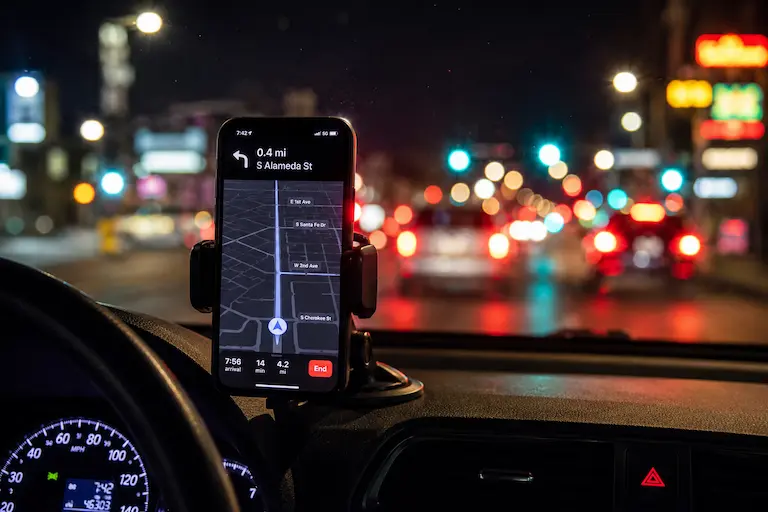
Colorado was the first state in the country to legalize ridesharing, doing so in 2014. Uber and Lyft operate as Transportation Network Companies (TNCs) under C.R.S. § 40-10.1-601, and the statute creates a tiered insurance scheme that determines, second by second, which policy covers a crash. Which period was active at the moment of impact is the single most consequential question in any Denver Uber case, and it is the first thing Uber's defense team works to dispute.
Period 0, App Off
The driver is using the vehicle personally, with no active TNC connection. Only the driver's personal auto policy applies. The complication: most Colorado personal policies contain a "livery exclusion" that denies coverage for any commercial use of the vehicle. A driver who was running Uber ten minutes earlier and has since logged off can still trigger a coverage fight if the personal insurer learns about the commercial activity.
Period 1, App On, No Ride Accepted
The driver is logged in and waiting for a ping, but has not yet accepted a trip. Uber and Lyft's contingent coverage applies at a reduced tier: $50,000 per person / $100,000 per accident / $30,000 property damage, but only if the driver's personal policy first denies the claim. This tier is the source of most coverage gaps in Denver rideshare cases. Period 1 crashes are the ones Uber fights hardest to characterize as Period 0.
Period 2, Ride Accepted, Driver En Route to Pickup
Once the driver accepts a trip request and begins driving to the pickup location, Uber's $1 million third-party liability policy through Progressive becomes the primary layer of coverage. This period activates the moment the driver taps "accept" in the app.
Period 3, Passenger in the Vehicle
From the moment the rider enters the vehicle until the trip is marked complete, the same $1 million liability policy applies. Under Colorado HB22-1089, Period 3 also triggers at least $200,000 per person / $400,000 per accident in uninsured/underinsured motorist (UM/UIM) coverage, critical protection when the other driver who caused the crash is uninsured or flees the scene.
Multi-Apping and Period Disputes
A substantial share of Denver rideshare drivers run Uber, Lyft, and food-delivery platforms simultaneously. When a crash happens, Uber argues the driver was on a Lyft trip; Lyft points back to Uber. Each carrier's defense team tries to land the claim in a lower coverage tier, or in another carrier's policy entirely. The fix is subpoenas to every active platform, a forensic reconstruction of the app states in the seconds before impact, and GPS records that establish exactly where the driver was and which dispatch log shows what. We know how to build that reconstruction, and we do it before the data disappears.
When the Driver Is Running Uber Eats Simultaneously
Food-delivery crashes, Uber Eats, DoorDash, Instacart, run on the same TNC period framework as passenger rides under Colorado law. If the driver had an Uber Eats delivery active while also logged into the passenger app, both carriers will argue the other is primary. That coverage dispute belongs in litigation, not in a one-sided conversation with an adjuster. We file the subpoenas and let the carriers litigate coverage between themselves while we drive the damages case on your behalf.
Types of Uber and Lyft Accident Claims We Handle in Denver
Passenger Injury Claims
You were a paying rider when the crash happened. Period 3 coverage is in play, putting Uber's $1 million liability policy and Colorado's mandatory UM/UIM stack on the table. This is the most straightforward claim type, but Uber's carrier will still work to push the offer down by disputing injury causation, running a quick independent medical exam, and pushing for a fast settlement before the full medical picture emerges.
Claims by Other Drivers, Hit by an Uber
You were in another vehicle that an Uber driver struck. Which coverage period was active at impact determines which policy tier applies, and Uber's defense team will fight to push you into the lowest tier available. We establish the period through app data subpoenas and GPS reconstruction before Uber's carrier frames the narrative.
Pedestrian and Cyclist Claims
Struck while crossing Colfax Avenue, walking out of a LoDo bar near Larimer Street, or biking the Cherry Creek Trail. Pedestrians and cyclists are third parties; they are not bound by Uber's mandatory arbitration clause and can pursue their claims directly in Denver District Court. These cases often produce the highest damages because the victim has no protective metal surrounding them and impact forces are transferred directly to the body. They overlap with our pedestrian accident guide and bicycle accident practice.
Uber Driver Injury Claims
The on-shift rideshare driver injured by a negligent third-party vehicle can recover against that driver's liability policy and trigger Uber's UM/UIM coverage stack. Colorado's HB22-1089 ensures that UM/UIM coverage is available during Periods 2 and 3, providing a meaningful recovery path when the at-fault driver is uninsured.
Uber Eats and Rideshare Delivery Crashes
Food delivery crashes run on the same TNC period framework as passenger rides under Colorado law. If the delivery driver was on an active delivery at the time of impact, the $1 million liability tier applies. Larger commercial delivery vehicles follow different rules; see our truck accident breakdown.
Wrongful Death Claims
Fatal Uber and Lyft crashes trigger Colorado's wrongful death statute under C.R.S. § 13-21-202, with a two-year filing window and a non-economic cap of $2,125,000 in 2026. These are the hardest cases we take. The only justice available is financial, and we pursue it with the full weight of our trial preparation.
Rideshare Sexual Assault Claims
Assaults during or after an Uber or Lyft ride are litigated under negligent-hiring, negligent-supervision, and product-liability theories. Uber has faced documented criticism for failures in its driver background-check system, and the company's internal safety reports have revealed thousands of reported sexual assaults across its platform. MDL 3084 in the Northern District of California consolidates many of these cases nationally; a local attorney can evaluate whether filing in Colorado state court or joining the MDL produces the better outcome for a particular victim.
Mandatory Arbitration: Who Is Bound and Who Is Not
When a passenger creates an Uber account, they click through a Terms of Service agreement containing a mandatory arbitration clause that can funnel their claim out of court and into a private arbitration forum. Uber uses this clause aggressively to avoid jury trials. However, the clause is not airtight, and for many claimants, it does not apply at all.
Passengers: Evaluating the Arbitration Clause
Courts in Colorado and across the country have examined Uber's arbitration clause for unconscionability, procedural defects, and improper scope. In some cases the clause has been found unenforceable; in others, carve-outs apply to certain injury types. An experienced Denver rideshare attorney evaluates the clause before allowing Uber to route a serious personal-injury case into a private forum with no jury and limited appeal rights. This is not a step to skip.
Third Parties: No Arbitration Obligation
Pedestrians, cyclists, and occupants of other vehicles that an Uber driver struck never agreed to Uber's Terms of Service. They cannot be compelled to arbitrate. Their cases proceed in Denver District Court, in front of a Denver County jury, with the full force of Colorado's rules of civil procedure, discovery, and evidence available to them.
Not Sure Which Type of Claim Applies to You?
A free call with our team clarifies coverage, establishes the applicable insurance period, and tells you what your case is realistically worth. There is no obligation.
Get a Free Case Review Call 720-763-5207Common Causes of Denver Uber and Lyft Accidents
Denver logged roughly 15,700 motor vehicle crashes in the most recent reporting year, over 5,500 injuries and 62 fatalities, with distracted driving implicated in approximately 40% of all collisions. Rideshare vehicles are structurally prone to several of those distraction factors, and Denver's geography amplifies every one of them.
- App-driven distracted driving. Rideshare drivers monitor the app constantly for pings, navigation updates, surge pricing shifts, and passenger ratings, all while operating a vehicle in dense urban traffic.
- Driver fatigue. Many Denver Uber and Lyft drivers work rideshare shifts after a full-time day job. A driver who has been working since 7 a.m. and is still on the app at 2 a.m. on a Saturday near Ball Arena is a documented risk.
- Unfamiliar Denver geography. Out-of-area drivers chasing surge pricing misread the I-25/I-70 "mousetrap" interchange, the tight curves on Speer Boulevard, the Peña Boulevard access roads, and the grade changes on I-70 through the foothills. Denver's grid breaks at the South Platte and again at the rail corridor, and drivers unfamiliar with those interruptions make dangerous lane changes at speed.
- Aggressive trip-volume driving. Rideshare pay per mile is low. Drivers chasing volume drive fast between fares, make abrupt lane changes, and push yellow lights, particularly on Colfax Avenue and Federal Boulevard where congestion makes trip timing unpredictable.
- Unsafe pickup and dropoff locations. Abrupt stops at Union Station curbs, the rerouted LoDo pickup zones along 20th Street, and the multi-level staging at DIA's Level 6 rideshare lot create rear-end and pedestrian-strike hazards at the highest-volume moments of a trip.
- Impaired third-party drivers. The impaired drivers that rideshare riders are actively trying to avoid are still on Denver's roads. They hit Ubers on Colfax, Federal, and Broadway with regularity, particularly between midnight and 3 a.m. on weekends near the LoDo and RiNo entertainment corridors.
- Denver weather. Black ice on I-25 southbound in February, sudden hail on the exposed high-plains stretch of Peña Boulevard, snowpack on E-470, and the rapid freeze-thaw cycle across the metro area create conditions that expose every form of driver inattention.
- Corporate negligence by Uber and Lyft. The companies provide little to no safety training, put drivers with poor driving records on the road, and pay in a way that rewards speed and trip volume over caution. The pattern shows up in the data, a University of Chicago study tied the rise of ridehailing to roughly a 3% increase in U.S. traffic fatalities. When a negligently hired or inadequately supervised driver injures you, we hold Uber and Lyft directly accountable for their own negligent hiring, training, and supervision, not just the driver.
Common Uber Accident Injuries
The injuries in rideshare crashes follow the same biomechanical patterns as any serious motor vehicle collision, but the vehicle types and impact positions common to Uber crashes (passengers seated in the rear, broadside strikes at intersections, rear-end collisions during unsafe dropoffs) create specific injury patterns that inform both the medical workup and the damages analysis.
Traumatic Brain Injuries
CDC data consistently identifies motor vehicle crashes as a leading cause of traumatic brain injury across all age groups. Rear-seat passengers in Uber vehicles are particularly vulnerable; they often lack the headrest contact that front-seat occupants have, and rearward impact can produce violent hyperextension that drives the skull into unpadded surfaces.
The TBI Spectrum in Rideshare Crashes
Traumatic brain injuries from vehicle impacts span a wide clinical range. All of them are compensable under Colorado law. None of them should be minimized in settlement negotiations.
Concussion and Post-Concussion Syndrome
The most common and the most frequently undervalued. Loss of consciousness is not required for a diagnosis, altered awareness at impact is sufficient. Persistent post-concussive symptoms (chronic headaches, cognitive slowing, light sensitivity, emotional dysregulation, sleep disruption) can last months to years. Neuropsychological testing and functional neuroimaging establish the objective finding that allows treating physicians to testify to long-term impairment. Research in the Journal of Neurotrauma documents persistent symptoms in a meaningful share of patients who sustain concussive forces consistent with moderate-speed vehicle impacts, the exact mechanism of many Uber rear-end and broadside crashes.
Cervical and Lumbar Disc Injuries
Rear-end impacts produce a rapid extension-flexion sequence in the cervical spine that herniates or bulges discs at C5-C6 and C6-C7. Broadside impacts force lateral loading across lumbar segments, frequently damaging L4-L5 and L5-S1. These injuries present initially as pain and radiation, progress to neurological deficits in serious cases, and often require epidural steroid injections, months of physical therapy, and surgical discectomy or fusion in the most significant presentations. Future medical costs for a surgically managed disc injury commonly reach six figures, all recoverable as uncapped economic damages.
Orthopedic Fractures and Soft-Tissue Tears
Braced impacts, where a passenger pushes against the seat in front of them or reaches for a grab handle, fracture wrists, clavicles, and radii. ACL and meniscus tears follow from the torsional forces of broadside impacts that twist occupants within the vehicle. These injuries require MRI documentation and often arthroscopic repair, and they are subject to the same "pre-existing condition" arguments we defeat with targeted orthopedic expert testimony.
PTSD and Psychological Injuries
Post-traumatic stress disorder following a serious vehicle crash is documented, compensable, and frequently undervalued by insurance carriers who treat psychological injury as less real than physical injury. Research published in JAMA Psychiatry and the Journal of Traumatic Stress establishes PTSD as a clinically significant and persistent outcome in a meaningful percentage of serious vehicle-crash survivors, particularly those who lost consciousness, perceived threat to life, or were trapped in a damaged vehicle. We work with treating psychologists and psychiatrists who can document the diagnosis and its functional impact on your daily life and earning capacity.
Get medical care immediately after an Uber crash, even if you feel fine. Adrenaline suppresses pain. Concussions, disc herniations, and soft-tissue tears often surface 24 to 72 hours after impact. A gap between the crash and your first medical visit is the insurer's first and most-used argument that the crash did not cause your injuries.
Proving Negligence and Liability in a Denver Uber Case
Like any Colorado personal injury claim, a Denver Uber accident case requires proof of four elements of negligence. The unique complexity in rideshare cases is that the negligence can run through multiple parties simultaneously, and each defendant's lawyer works to shift responsibility onto the others.
The Four Elements of Negligence
- Duty. The driver, Uber itself, or a third-party defendant owed you a duty of reasonable care.
- Breach. That duty was violated, through distracted driving, fatigue, an unsafe dropoff stop, or a platform design that incentivized dangerous behavior.
- Causation. The breach actually caused the crash and your specific injuries.
- Damages. You suffered real, measurable harm with a dollar value attached.
Who Can Be Held Liable
- The Uber or Lyft driver for negligent operation of the vehicle.
- Uber or Lyft directly under negligent-hiring, negligent-retention, or negligent-supervision theories, particularly where the driver's prior complaint history, deactivation record, or background-check gaps were accessible to the platform.
- A third-party driver who caused the crash, triggering Uber's UM/UIM coverage if that driver is uninsured.
- The vehicle manufacturer for defective components: tires, airbags, braking systems, or steering.
- The City and County of Denver, CDOT, or RTD for defective road design, signal failures, or maintenance failures, subject to the 182-day CGIA notice deadline.
Colorado's 50% Comparative Fault Bar
Colorado follows modified comparative negligence under C.R.S. § 13-21-111. If a jury finds you less than 50% responsible for the crash, you recover, reduced by your percentage of fault. At 50% or more, you recover nothing. Uber's defense teams work that line relentlessly. They argue seatbelt non-use, distraction, riding with a driver you allegedly knew was impaired, or any other conduct they can pin on you.
They also designate non-parties at fault under C.R.S. § 13-21-111.5, naming empty-chair defendants who aren't before the court to siphon fault percentage away from Uber and its carrier. A competent Denver Uber accident lawyer prepares to litigate against those phantom defendants and keep fault where it belongs.
Uber's Independent Contractor Defense
Uber classifies its drivers as independent contractors, not employees, a classification designed in part to limit Uber's vicarious liability for driver negligence. Colorado's TNC statute and recent case law complicate this defense where Uber's app directly controls the driver's behavior (routing, pricing, communication, rating pressure). We build negligent-hiring and platform-design arguments that reach Uber's corporate conduct directly, independent of the contractor classification.
What Damages You Can Recover in a Denver Uber Crash
Economic Damages
Medical bills past and future, lost wages, lost earning capacity, vehicle damage, mileage to medical appointments, in-home care, and out-of-pocket household service costs. No statutory cap. Catastrophic injury cases, severe TBI, spinal cord injury, amputation, routinely produce seven and eight-figure economic damages totals because future medical care and lost earning capacity dominate the math.
Non-Economic Damages
Pain and suffering, loss of enjoyment of life, scarring, disfigurement, PTSD, anxiety, depression, and loss of consortium for a spouse. Colorado caps these at $1.5 million for general personal injury in 2026 (HB24-1472) and $2,125,000 for wrongful death, with biennial inflation adjustments starting in 2028.
Exemplary Damages
Available under C.R.S. § 13-21-102 for willful and wanton conduct, an impaired Uber driver, a hit-and-run third party, deliberate hours-of-service violations. A judge can match the compensatory award dollar-for-dollar and triple it in particularly egregious cases.
How Colorado Courts Evaluate Pain and Suffering
Two calculation methods dominate Colorado jury practice. The multiplier method takes the total economic damages and multiplies by a factor between 1.5 and 5 depending on severity, a $200,000 economic loss at a 3x multiplier produces $600,000 in pain-and-suffering damages. The per diem method assigns a daily dollar value (often benchmarked to the victim's daily wage) and multiplies by the number of days the victim is expected to live with the impairment. Juries are not bound to either method, but experienced trial lawyers walk them through both and argue for the number the evidence supports.
Bad-Faith Insurance Claims
When an insurer unreasonably delays payment or denies a covered claim, Colorado law under C.R.S. §§ 10-3-1115 and 10-3-1116 allows the policyholder to pursue the insurer directly for two times the covered benefit plus reasonable attorneys' fees. When Progressive or Mobilitas refuses to engage in good-faith settlement discussions on a claim with clear liability and serious injuries, bad-faith exposure is a lever we do not leave unused.
Filing Deadlines for Denver Uber Accident Claims
Three-Year Statute of Limitations
Colorado gives rideshare crash victims three years from the date of the accident to file suit under C.R.S. § 13-80-101(1)(n), longer than premises-liability claims (two years) or wrongful death (two years). Miss it and the claim is permanently barred, regardless of how serious the injuries.
182-Day Government Notice Deadline
Claims against the City and County of Denver, CDOT, or RTD, for road defects, signal failures, or maintenance failures, require written notice within 182 days under the Colorado Governmental Immunity Act. This deadline runs from the date of the crash. Missing it permanently bars the governmental claim even if the private claims survive.
Three years is a long time in calendar terms. It is a short time in evidence terms. Uber's app data overwrites on rolling schedules. Dashcam footage from the Uber vehicle and nearby storefronts disappears in 30 to 90 days. Witnesses move, memories shift, and the driver's employment record at Uber gets harder to subpoena as time passes. Call in week one.
What to Do After a Denver Uber or Lyft Accident
The first 48 hours shape the entire case. Every step matters.
- Call 911. Get a Denver Police Department report or a Colorado State Patrol report; it anchors the case and establishes the official record of what happened and when.
- Screenshot the trip immediately. Capture the trip details, driver name and photo, vehicle make and plate, route map, fare receipt, and timestamps from the Uber app before the trip session closes. File the in-app "Trip Issue" report with bare, factual information only, no descriptions of injuries or speculation about fault.
- Document the scene. Photograph the vehicles, road conditions, traffic signals, the driver's app screen if visible, and any debris or skid marks.
- Get witness contacts. Names and phone numbers of anyone who saw the crash or the events immediately before it.
- Get medical attention, even if you feel fine. Adrenaline suppresses pain. Concussion, cervical disc damage, and soft-tissue tears commonly surface 24 to 72 hours after impact. Emergency departments at Denver Health, St. Joseph Hospital, and UCHealth Anschutz document injuries and begin the medical record your case will depend on.
- Do not give a recorded statement to Uber's insurer or the at-fault driver's carrier before speaking with an attorney. Recorded statements taken in the first days after a crash are designed to capture admissions that reduce your recovery.
- Stay off social media. Defense teams actively monitor claimants' social media accounts for any content that could be used to minimize the injury.
- Call a Denver Uber accident lawyer immediately. Spoliation letters need to reach Uber, the driver, and any third-party carrier within days of the crash to legally freeze the digital evidence before it overwrites.
Do not accept Uber's first settlement offer. The first offer is designed to close the file before you know the full scope of your injuries. A settlement release, once signed, is final; there is no reopening it when a herniated disc requires surgery six weeks later. Patient case-building produces significantly better outcomes than fast money from a company that knows exactly what it is buying with that check.
Why Denver Uber and Lyft Cases Are Different
Denver is a rideshare city by design, dense, event-driven, and ringed by highways that concentrate rideshare traffic at exactly the highest-risk moments. Understanding the city's rideshare geography is part of understanding how these cases are won.
Lower Downtown is the original engine. Bars and restaurants line Larimer Street, Market, Blake, and Wynkoop. After a game at Coors Field or a concert at Ball Arena, tens of thousands of people open the Uber app simultaneously, surge pricing spikes, drivers accelerate between pickups, and the pedestrian density on those blocks creates a collision risk that plays out with regularity. Denver's ordinance now restricts rideshare pickups in the LoDo and Ballpark neighborhoods between 10 p.m. and 3 a.m. along the 18th-to-21st Street corridor, rerouting rideshare volume to designated zones a block or two away, which reduces congestion at some points while concentrating traffic at others during peak drunk-driving hours.
RiNo (River North) adds its own volume along Larimer, Walnut, and Blake Streets. Capitol Hill and the Colfax strip push rideshare demand across one of Denver's densest pedestrian corridors. The I-25/I-70 mousetrap interchange funnels every driver coming into the city from the south and west through a constrained geometry that produces a disproportionate share of high-speed Uber crashes. The Speer Boulevard S-curves are another recurring setting, particularly late at night when visibility is limited.
Denver International Airport runs one of the busiest rideshare operations in the country. The massive staging lot off Peña Boulevard sends a constant stream of rideshare vehicles onto Peña and then directly onto I-70 into the city. Travel-fatigued tourists, first-time DIA riders unfamiliar with the Level 6 pickup structure, drivers looping the airport to avoid "keep it moving" enforcement, and exposed high-plains weather on Peña Boulevard make the DIA-to-downtown corridor a recurring crash setting.
We litigate in Denver. We know these roads, these intersections, and the crash patterns associated with each of them. That local knowledge matters when we are deposing an Uber corporate representative about how the platform designs its driver incentive structure, or when we are arguing to a Denver County jury that a driver's decision to loop the Ball Arena dropoff zone three times during a surge was reckless, not just distracted.
Talk to a Denver Uber Accident Lawyer Today
Free consultation. No fee unless we win. We answer the phone, return calls same day, and start locking down evidence the moment we are retained. Call before the app data overwrites and before Uber's defense team finishes building its file on you.
Get a Free Case Review Call 720-763-5207Frequently Asked Questions
Should I hire an Uber accident lawyer?
Yes. People who hire an Uber accident lawyer typically recover far more than those who try to go it alone. Without a lawyer, Uber will likely push your case into arbitration, where full compensation is unlikely, and insurers rarely pay what you are actually owed. We hold Uber and Lyft directly responsible for their negligent hiring, training, and supervision, and we know how to outmaneuver the insurance companies.
Who pays after an Uber crash?
It depends on whether the driver was "on the app" and who was at fault. If the Uber driver is at fault, Uber's $1 million liability policy applies, and with strategic lawyering Uber itself can be held directly liable. If another driver is at fault, Uber's $200,000 uninsured/underinsured (UM/UIM) policy can protect injured drivers and passengers, on top of their own UM/UIM coverage.
What should I do after an Uber accident?
Call the police and get medical help first. If you can, document everything, photos, video, witness names, and a screenshot of the ride in the app. Report the crash to Uber and to your insurer, then call an experienced rideshare accident lawyer. We handle the insurance companies and gather the evidence while you focus on healing.
What should I do if I was injured while driving for Uber?
Contact a lawyer right away. Uber often tries to avoid responsibility for driver injuries by arguing you were an independent contractor rather than an employee. We hold rideshare companies accountable for their negligence and help injured Uber and Lyft drivers recover fair compensation.
Are Uber accidents making our roads more dangerous?
Research suggests yes. A University of Chicago study tied the rise of ridehailing to roughly a 3% increase in U.S. traffic fatalities. Drivers juggle navigation, ride pings, and the road at once, while rideshare companies provide little safety training, sometimes hire drivers with poor records, and reward speed and trip volume, a combination that increases risk.
Get a FREE Case Evaluation Today
We're here to help, 24 hours a day, 7 days a week