Uber Accident Lawyer in Aurora, CO
Injured in a rideshare crash in Aurora? Lionheart Injury Law pins down Uber's $1 million policy and wins what your case is actually worth.
Start Your Free Case ReviewRecent Results

What Compensation Can You Recover From an Uber Accident?
The average Uber accident case we take settles for $200,000 to $5 million, and the $1 million rideshare policy is only the starting point. Between Uber's policy, the driver's coverage, and your own UM/UIM, these are coverage-stacking cases.
Bigger and faster settlements come from trial preparation that starts the day you sign, and from a firm that, so far, has never lost.
With us, you speak directly with your attorney, and our RN Medical Director manages your medical care from day one, insurance or no insurance. There's no fee unless we win. Contact us now for a free consultation.
Why Aurora Sees So Many Uber Crashes
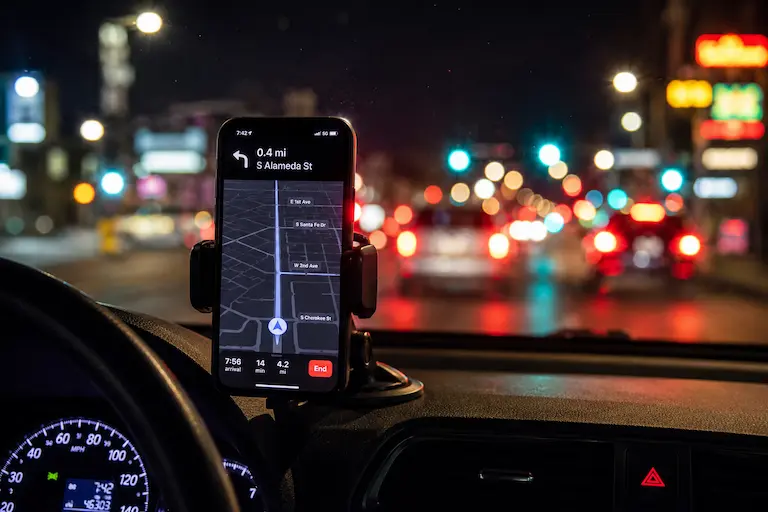
Aurora is a rideshare town. DIA's Level 6 rideshare pickup pulls Uber traffic along Peña Boulevard, I-70, and E-470. The Stanley Marketplace, Town Center, Havana, and East Colfax bar strips feed thousands of weekend rides. The Anschutz Medical Campus generates a constant flow of late-night discharges and shift-change rides.
And Aurora's intersections rank among Colorado's most dangerous, a 2025 study found 24 of the state's 50 worst sit inside city limits, which puts even careful Uber drivers at real risk along Chambers, Iliff, Mississippi, Parker, and the I-225 corridor. When an Uber crashes here, the ride that was supposed to keep you safe becomes the most legally complicated kind of car accident there is.
How Colorado Treats Uber and Lyft
Colorado was the first state in the country to legalize ridesharing, in 2014. Today, Uber and Lyft operate as Transportation Network Companies (TNCs) under C.R.S. § 40-10.1-601 et seq. The TNC statute does three important things at once:
- Independent contractor classification. Uber and Lyft classify drivers as independent contractors rather than employees, insulating the company from automatic vicarious liability.
- No common-carrier designation. Unlike traditional taxis and limousines, TNCs are not classified as common carriers, which lowers the duty of care owed to passengers.
- Tiered insurance scheme. The statute sets a layered insurance framework that determines, second by second, which policy covers a crash. This is the heart of every Uber accident case in Aurora.
The arbitration trap. When you signed up for the Uber or Lyft app, you accepted a mandatory arbitration clause that may funnel passenger claims out of court. Third parties, pedestrians, cyclists, occupants of other vehicles, are not bound. A skilled lawyer evaluates carve-outs, severability, and recent appellate decisions before letting the company push you out of a jury trial. The same framework, with its own wrinkles, applies to Lyft accident.
The Three Insurance Periods Every Aurora Uber Case Turns On
Colorado divides Uber's insurance into discrete periods. Which period was active at the moment of the crash determines whose money is on the line, and how much of it.
Period 0, App Off
The driver is using the car personally. Their personal auto policy is the only coverage. The trap: most personal auto policies contain a "livery exclusion" denying any commercial use. If the driver carries only personal coverage and was running rideshare moments earlier, expect a coverage fight.
Period 1, App On, No Ride Accepted
The driver is logged in, waiting for a request. Uber/Lyft contingent liability of $50,000 per person / $100,000 per accident / $30,000 property damage kicks in if the driver's personal policy denies. This is the lowest tier and the source of most coverage gaps.
Period 2, Ride Accepted, En Route
Once the driver accepts a request, Uber's $1 million third-party liability policy (underwritten by James River; Lyft's by Mobilitas/Liberty Mutual) becomes primary. This is the policy Uber fights hardest to keep closed.
Period 3, Passenger In the Car
Same $1 million liability coverage, plus, under Colorado HB22-1089, at least $200,000 per person / $400,000 per accident in UM/UIM coverage. That UM/UIM piece matters: if you're a passenger and the other driver is uninsured or flees, Uber's policy backs you.
The single most consequential question in any Aurora Uber claim is: what period was active at the moment of impact? GPS pings, braking telemetry, in-app messages, dispatch logs, the vehicle's event-data recorder, and driver phone records all answer it, and Uber will not hand them over voluntarily. Spoliation letters need to go out within days of the crash.
Multi-Apping Makes This Harder
A majority of rideshare drivers run Uber, Lyft, and food-delivery apps simultaneously. Uber will argue the driver was on a Lyft trip; Lyft will point back. The fix is subpoenas to every platform and a clean reconstruction of the seconds before impact. Uber Eats crashes run on the same TNC period framework.
Who Can File, and Who Can Be Held Liable
An Uber crash in Aurora generates claims for and against a wider cast than people expect.
Who Can File
- Rideshare passengers injured in the crash
- The on-shift rideshare driver hit by a third party
- Occupants of the other vehicle
- Pedestrians struck along Colfax, Havana, or any Aurora street
- Cyclists clipped at I-225 trail crossings
- Families of anyone killed in an Uber-related crash
Who Can Be Held Liable
- The Uber or Lyft driver for negligent driving, distracted by the app, drowsy from a stacked second-job shift, speeding to maintain trip volume, or stopping abruptly in unsafe locations like the Stanley Marketplace curb or the DIA Level 6 islands.
- Uber or Lyft directly under negligent-hiring, negligent-retention, or negligent-supervision theories, particularly where the driver had a known history the background check missed, or a complaint pattern Uber ignored.
- A third-party driver who hit the Uber. Their policy is the first stop, with Uber's UM/UIM stacking behind if the at-fault driver is uninsured or underinsured.
- The vehicle manufacturer for defective tires, airbags, or steering components.
- A government entity for a defective roadway or signal, claims against the City of Aurora, Adams County, Arapahoe County, or CDOT trigger the Colorado Governmental Immunity Act and its 182-day notice deadline.
Not Sure Who's Liable in Your Uber Crash?
The layered insurance and multiple potential defendants in rideshare cases make it easy to miss coverage. A free call with our team can identify every source of recovery available to you.
Get a Free Case Review Call 720-763-5207Damages You Can Recover
Colorado puts personal-injury compensation into three buckets, and Uber cases run the full register.
Economic Damages
Medical bills past and future, lost wages, lost earning capacity, vehicle damage, mileage to appointments, and out-of-pocket household-services costs. No statutory cap.
Non-Economic Damages
Pain and suffering, loss of enjoyment, scarring, disfigurement, PTSD, loss of consortium for a spouse. Under HB24-1472, the 2026 cap for general personal-injury non-economic damages is $1.5 million, adjusting biennially for inflation starting 2028. The wrongful-death non-economic cap is $2,125,000 in 2026.
Physical Impairment and Disfigurement
Permanent injury, scarring, and loss of physical function. In Colorado, these sit outside the non-economic damages cap and are often the largest line in a serious-injury verdict.
Exemplary Damages
Available under C.R.S. § 13-21-102 for willful and wanton conduct, drunk Uber drivers, hit-and-run third parties, hours-of-service violations. A judge can match the compensatory award dollar-for-dollar and triple it for particularly egregious conduct.
Bad-Faith Claims
When an insurer drags its feet or unreasonably denies payment, Colorado law (C.R.S. § 10-3-1115/1116) lets the policyholder sue for two times the covered benefit plus attorneys' fees, a powerful lever when Uber's carrier plays games.
Common Uber Crash Injuries
- Traumatic brain injury and concussion
- Cervical and lumbar disc herniations
- Fractured wrists and clavicles from braced impacts
- Internal organ damage from seatbelt forces
- Soft-tissue trauma to the back and neck
- Post-traumatic stress disorder
- Aggravation of pre-existing conditions
- Wrongful death
Aggravation of pre-existing conditions is fully compensable under Colorado's eggshell-plaintiff rule, the defendant takes the victim as they find them.
What to Do After an Aurora Uber Accident
Move quickly. The first hours shape the entire case.
- Call 911. Get medical care and a police report. The Aurora Police Department or Colorado State Patrol report anchors the case.
- Screenshot the trip immediately. Open the Uber app and screenshot the trip details, driver name, vehicle, route, fare receipt, and timestamps, the data Uber will resist producing later. File the in-app "Trip Issue" report with bare facts only: time, location, vehicles. Don't speculate about injuries or fault.
- Document the scene. Photos of the vehicles, road conditions, license plates, and the driver's app screen if visible.
- Get witness contacts. Names and phone numbers, ideally with a one-line summary of what they saw.
- Get medical attention. Even if you feel fine. Adrenaline masks injury, concussion, cervical strain, and disc damage often surface days later. UCHealth and The Medical Center of Aurora are the closest ERs for most Aurora rides.
- Do not give a recorded statement to Uber's insurer. Anything you say will be used to build a comparative-fault defense against you.
- Call an Aurora Uber accident lawyer. Spoliation letters need to go to Uber, the driver, and any third-party carrier within days, before app data overwrites and dashcam footage disappears.
Beneath the app-status question sits a crash case like any other, and it gets proven the way we prove every car accident claims: evidence first, valuation second, coverage last.
Colorado Law and Your Uber Claim
Statute of Limitations
Aurora Uber accident victims generally have three years from the date of the crash to file suit under C.R.S. § 13-80-101(1)(n), longer than slip-and-fall (2 years) and wrongful death (2 years from death). Claims against public entities require 182-day CGIA notice.
Modified Comparative Negligence
Under C.R.S. § 13-21-111, your recovery is reduced by your percentage of fault, and eliminated if you're 50% or more responsible. Uber's defense lawyers work that line constantly. What you say to the insurer in the first hour matters.
Non-Party Fault Designation
Under C.R.S. § 13-21-111.5, the defense can name an "empty chair" defendant, a non-party, to siphon fault away from parties actually in court. Your lawyer needs to be ready to litigate against defendants who aren't even in the room.
What the Case Looks Like
Investigation and spoliation letters → demand to carriers → complaint filed → discovery → depositions → IME → mediation → trial if necessary. The strongest closing offers come only after a credible threat of trial is built. Serious cases use accident reconstructionists, biomechanical engineers, neurologists, life-care planners, and forensic economists.
Three years is plenty until it isn't. Uber's app data overwrites on a rolling basis, and dashcam, dispatch, telematics, and driver text messages disappear without timely spoliation letters. Call before the data is gone.
Sexual Assault by Rideshare Drivers
A serious category of Uber/Lyft litigation involves sexual assault by drivers. These claims run on negligent-hiring, negligent-supervision, and product-liability theories, alleging that Uber's background-check system, in-app safety features, and failure to terminate drivers with prior complaints created the danger. Multidistrict litigation (MDL 3084) consolidates many of these cases nationally. If you experienced an assault during or after an Aurora Uber ride, an attorney can advise on filing locally or joining the MDL. These consultations are fully confidential.
Talk to an Aurora Uber Accident Lawyer Today
Nothing up front. We work on contingency, no fee unless we recover. We front investigation, expert, deposition, and filing costs. Call before the app data overwrites, before Uber's defense team finishes building its file on you.
Get a Free Case Review Call 720-763-5207Get a FREE Case Evaluation Today
We're here to help, 24 hours a day, 7 days a week